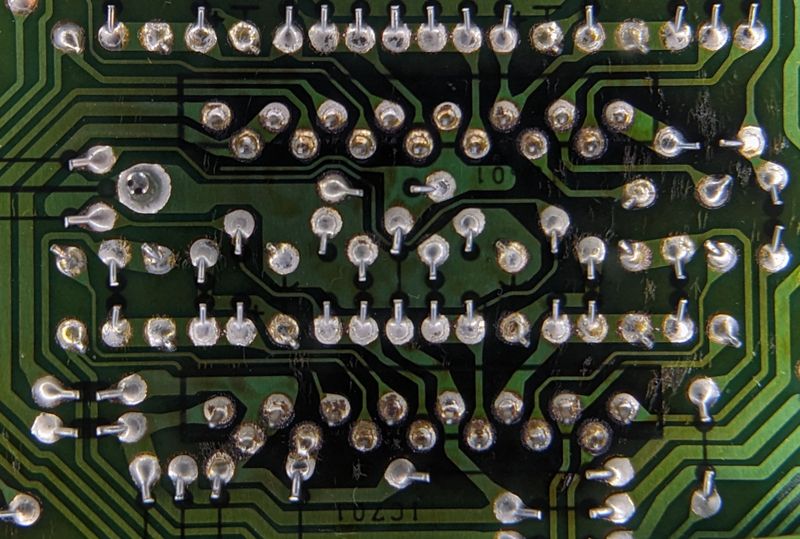
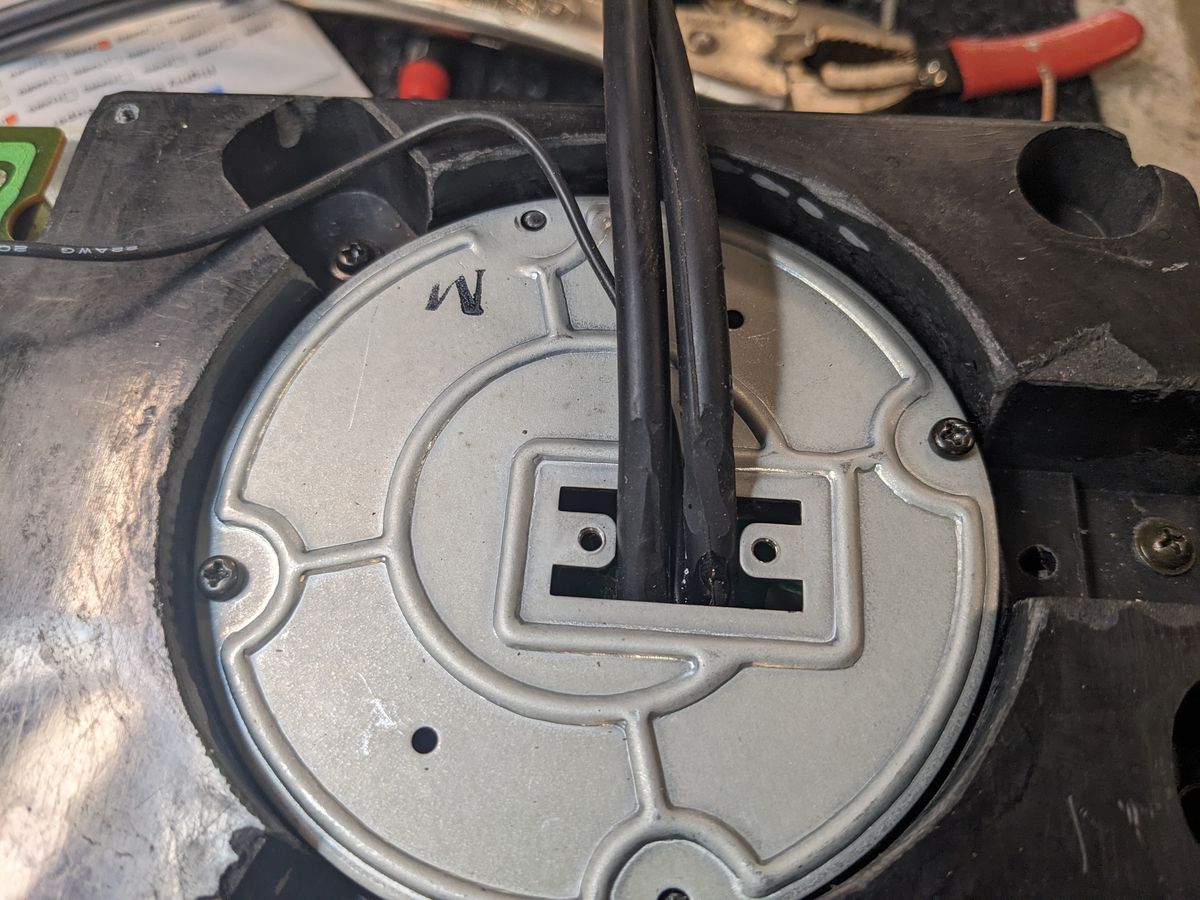
Sony’s STR-DE### series home theater receivers were very popular in the 1990s, but buyers might have been less eager had they known that Sony designed these stereos with a built-in time bomb sure to prevent long life. The output amplifier transistors are hefty and well protected from overheating by a massive aluminum heat sink, but the drivers are hybrid modules with no provision whatsoever for heat dissipation. Inevitably they overheat to the point of melting their solder connections. At first the sound will just shut off occasionally, but over time more serious problems will arise, ranging from failure of the module to smoke and flames emanating from the chassis. Here is an example of the initial, least catastrophic, failure due to melting of the solder connections.
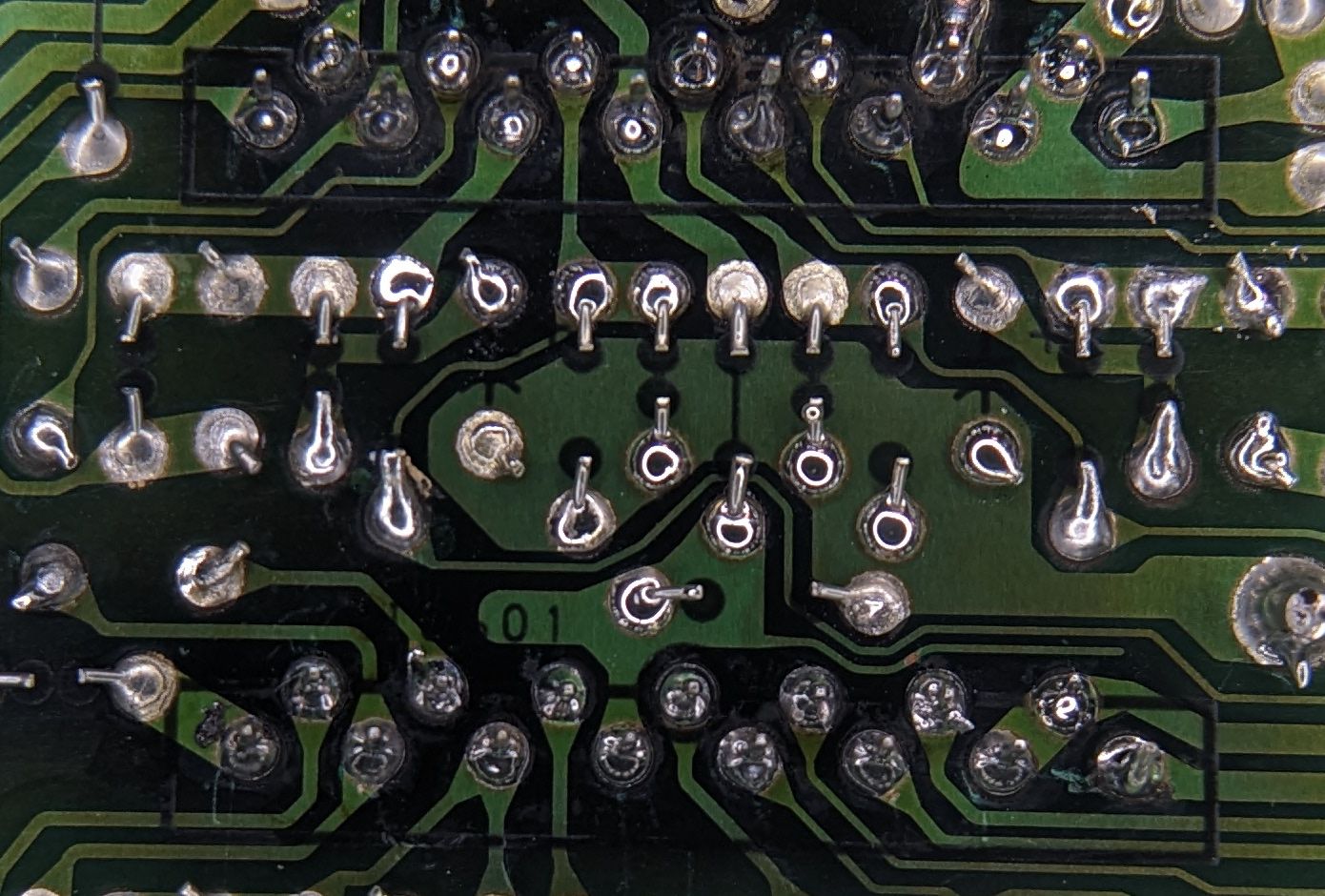
The module’s pins are the ones arranged diagonally on the horizontal in the photo. Notice the obvious circular breaks around every pin. Here is a photo after removing the old solder, cleaning the board, and resoldering the pins.
Repair cost was under $75. Customer was happy to pay!
A customer brought me a pair of vintage JBL L-100’s and requested that I replace the original, very simple crossover with something entirely different. He directed me to a discussion forum where this sophisticated device was posted, along with rave reviews from some L-100 owners who had incorporated it into their speakers. Could I provide this service for him? Of course! All I had to do was assemble the components as indicated in the schematic and install it in the cabinet!
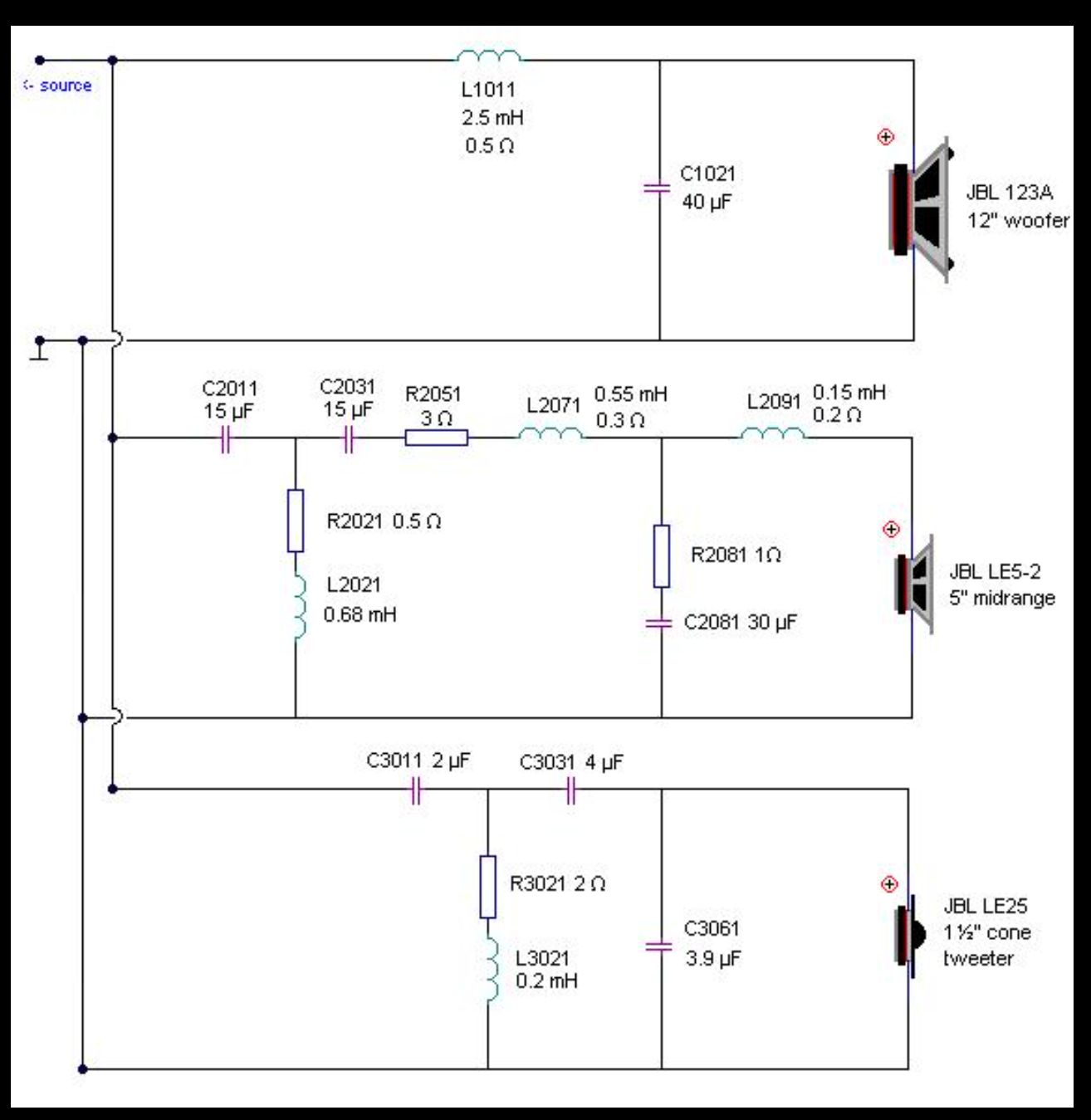
Famous last words. Here’s the schematic:
It “only” took a few hours for me to figure out how to arrange everything, but then came the testing phase, and I was a little taken aback by the wild variations in impedance and response at various frequencies in the audible range. Whoever designed it, I reasoned, must have done that on purpose to compensate for nonlinearities in the speakers themselves, so the result would be a smooth, detailed output. But one thing bothered me about the design: at frequencies above about 12khz, the response rolled off rapidly, so that by the time I got to 20khz, the output was negligible. Granted, most people “of a certain age” can’t hear much in that frequency range, but I couldn’t just dismiss such an obvious flaw.
I was not at all inclined to redesign the crossover and I sure wasn’t going to give up and walk away from the project, but as I pored over the schematic I realized there was one simple change I could make that might, might, resolve the issue. Directly across the tweeter connections is C3061, a 3.9uf capacitor. In a blinding flash of the obvious, I realized that capacitor could be changed to a smaller value, thus reducing the attenuation of the higher frequencies without affecting the operation of the T-filter consisting of C3011, C3031, R3021, and L3021. So I changed it to a 1uf and the difference was astounding!
Granted, the result might be that frequencies above 12 khz are unduly emphasized, but here again, for people “of a certain age,” that would be a good thing! Besides, the L-100 has level controls for both the midrange and the tweeter, so if the highest highs were a bit on on the “high” side …
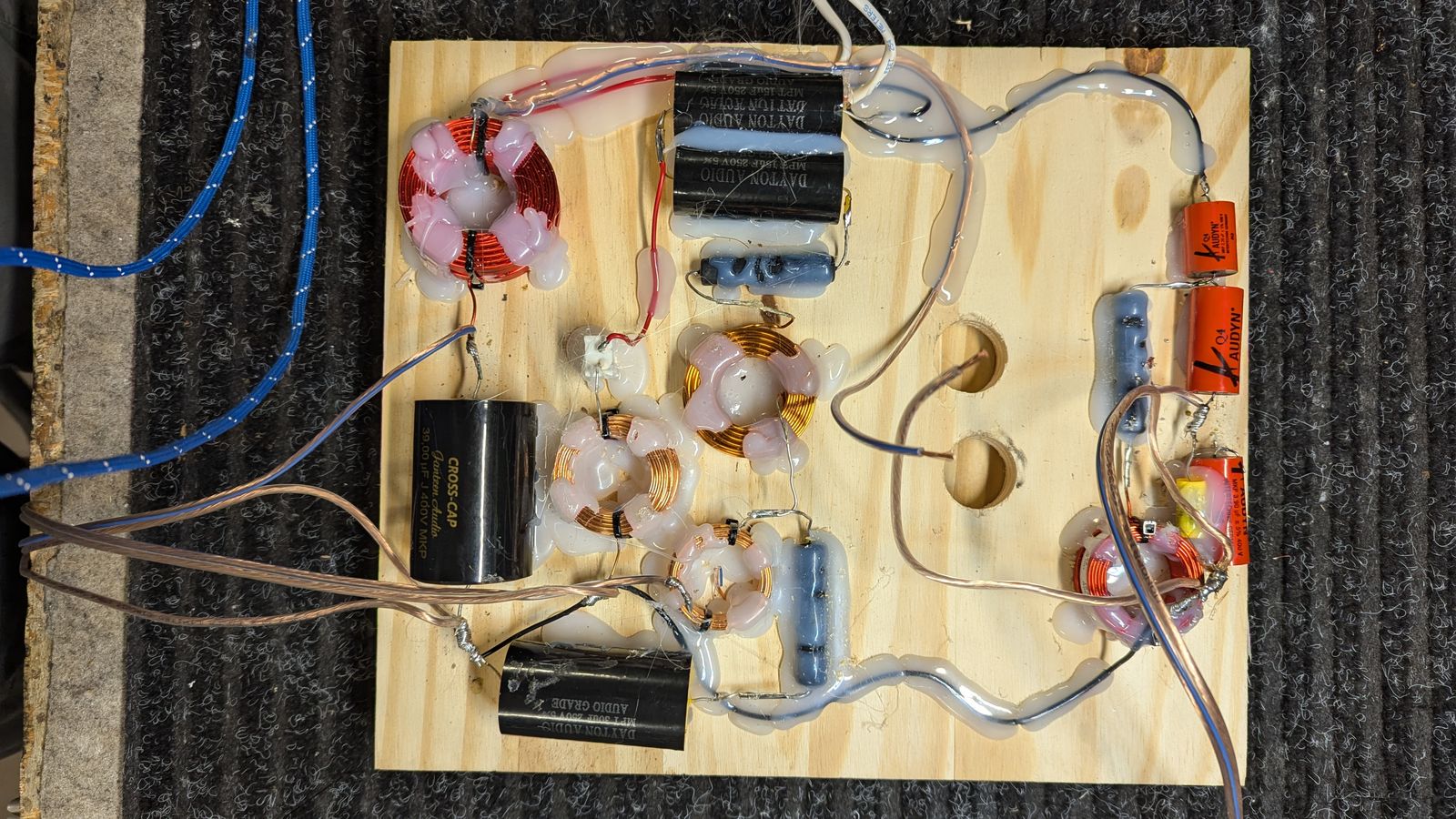
Here’s what the crossover looks like, mounted on a 1×12 board, ready to install in the cabinet:
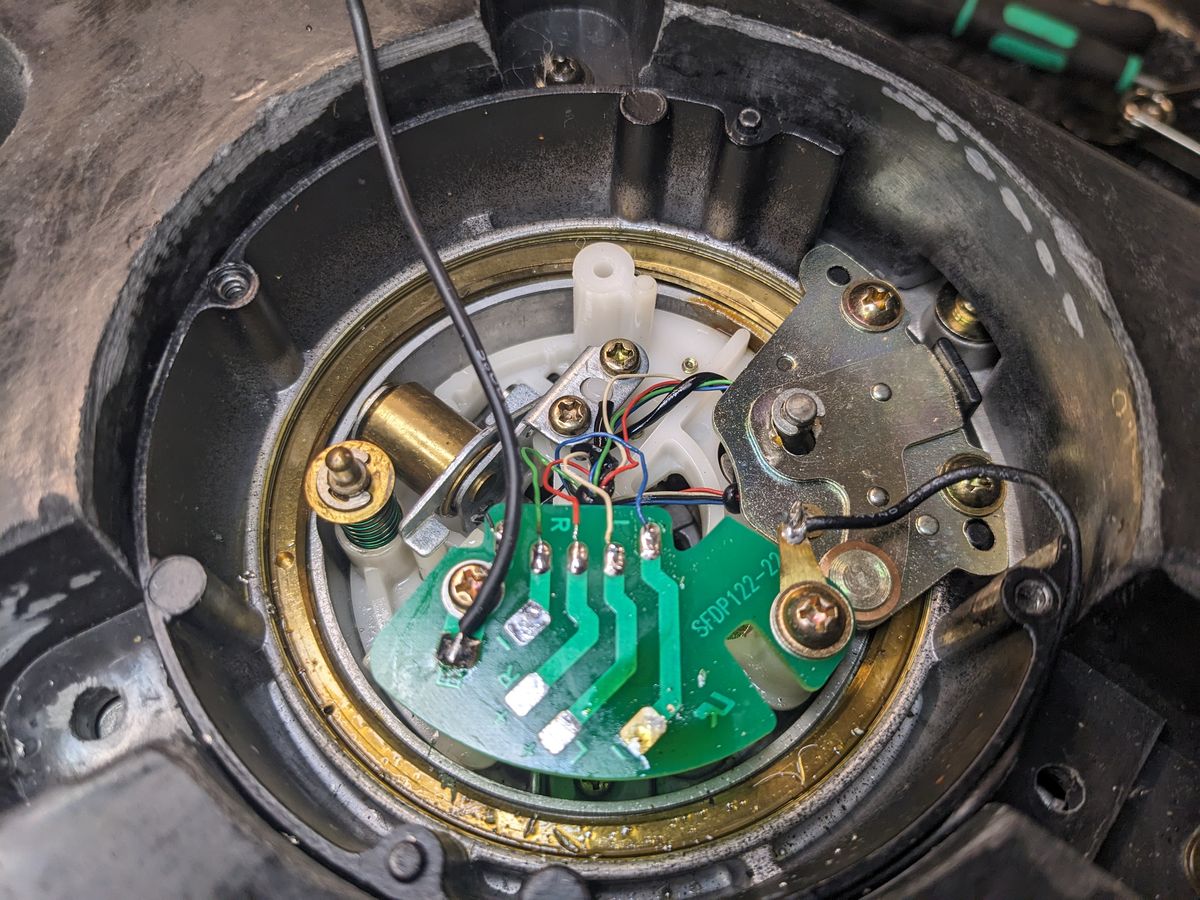
I’ve done a few of these over the years, but this is the first time I’ve had one where the customer tried to DIY before bringing it to me. Not too shabby for an amateur, but what they did defeats the whole purpose of the extra ground wire, which is to provide an isolated ground for the tone arm.
From the factory, the tone arm is grounded to the chassis, and the cartridge wires are not. So what you don’t want to do is solder the cartridge wires to the chassis ground.
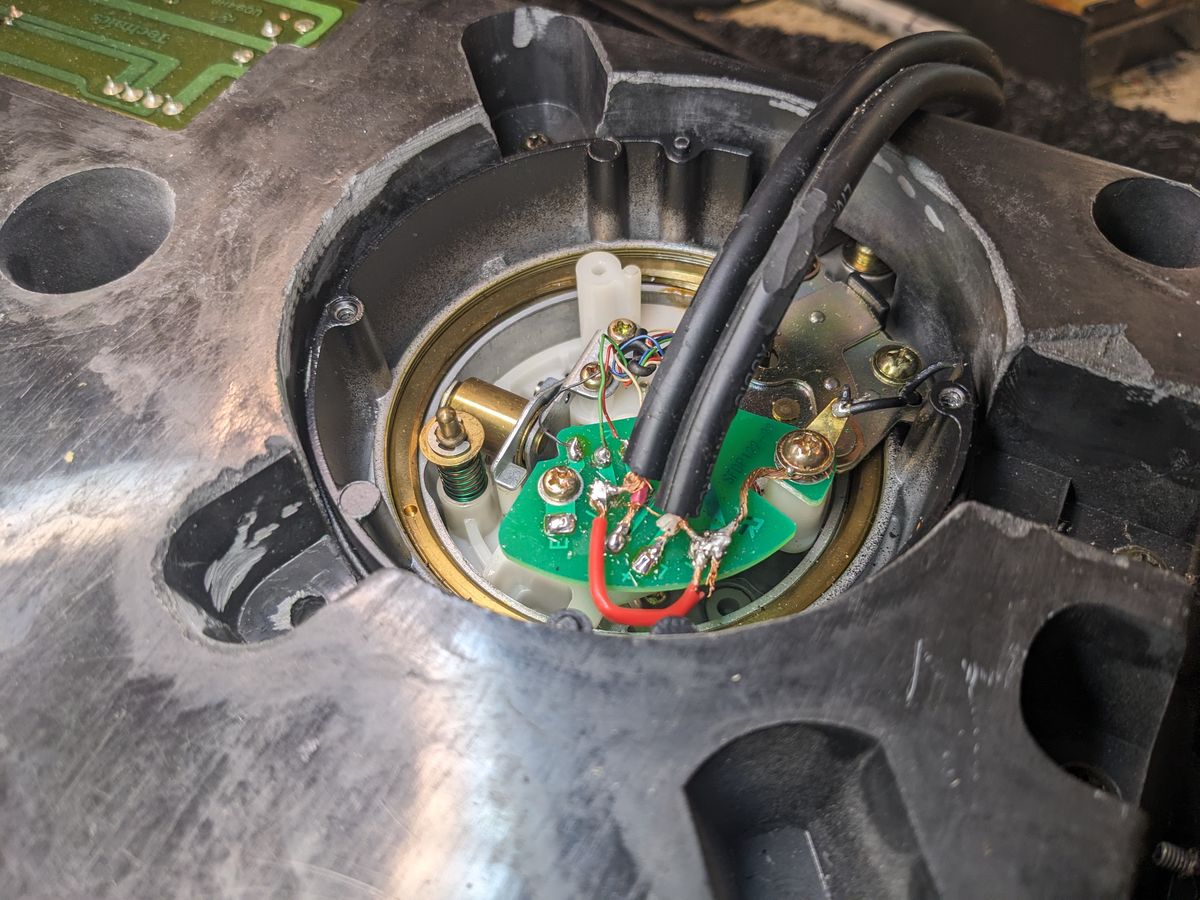
So my first task was to remove the wires installed by the customer and clean up the circuit board, then install the extra ground wire without connecting it to the cartridge wires.
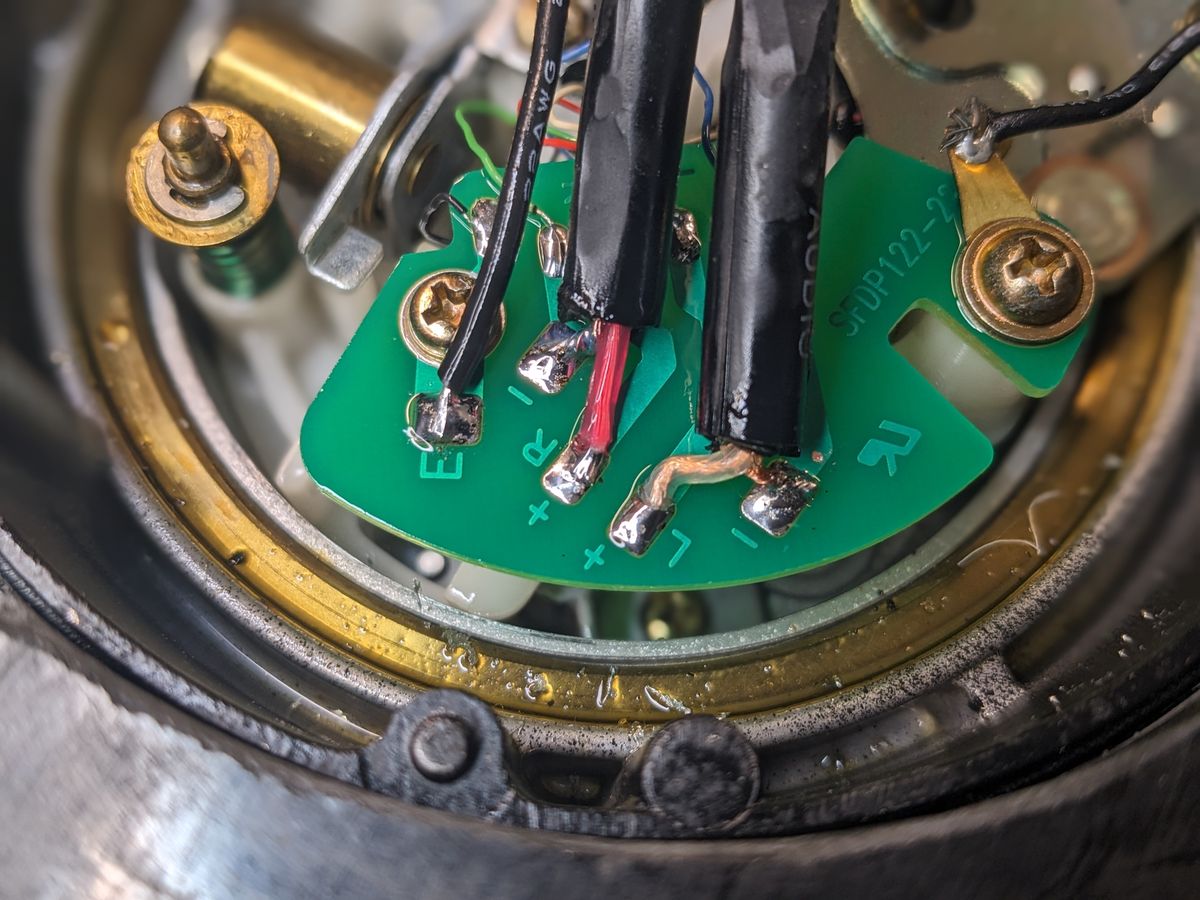
Next, “dress” the ends of the patch cord and solder to the clean interconnect board. “Dressing” is the process of cutting, stripping, twisting, and tinning the wire ends so they fit perfectly and solder securely.
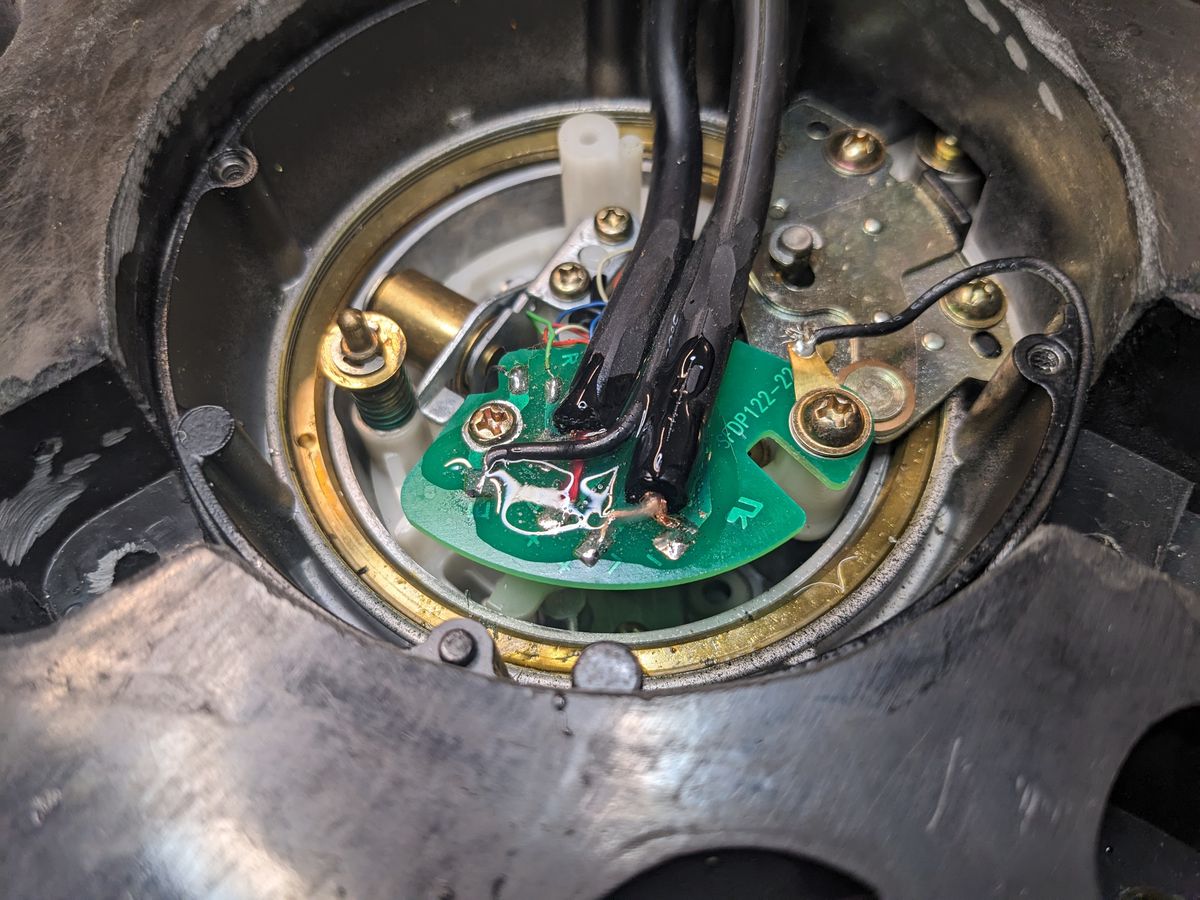
I know, and you should know, that if you use the overly thick patch cords, the factory strain relief clamp is not going back on again. To keep the wire connections secure, I epoxied the wires to the circuit board. Believe me when I tell you, there is no advantage to the extra thickness. In this case, it was mostly extra rubber, but extra wire doesn’t make much different at all in a low frequency, low current situation.
Next the original cover is reinstalled, taking care not to yank on the wires, which in turn would yank on the epoxy seal, possibly breaking it (and other things!).
And last, I reinstall half of the original strain relief clamp. The oversize patch cord is firmly clamped in place.
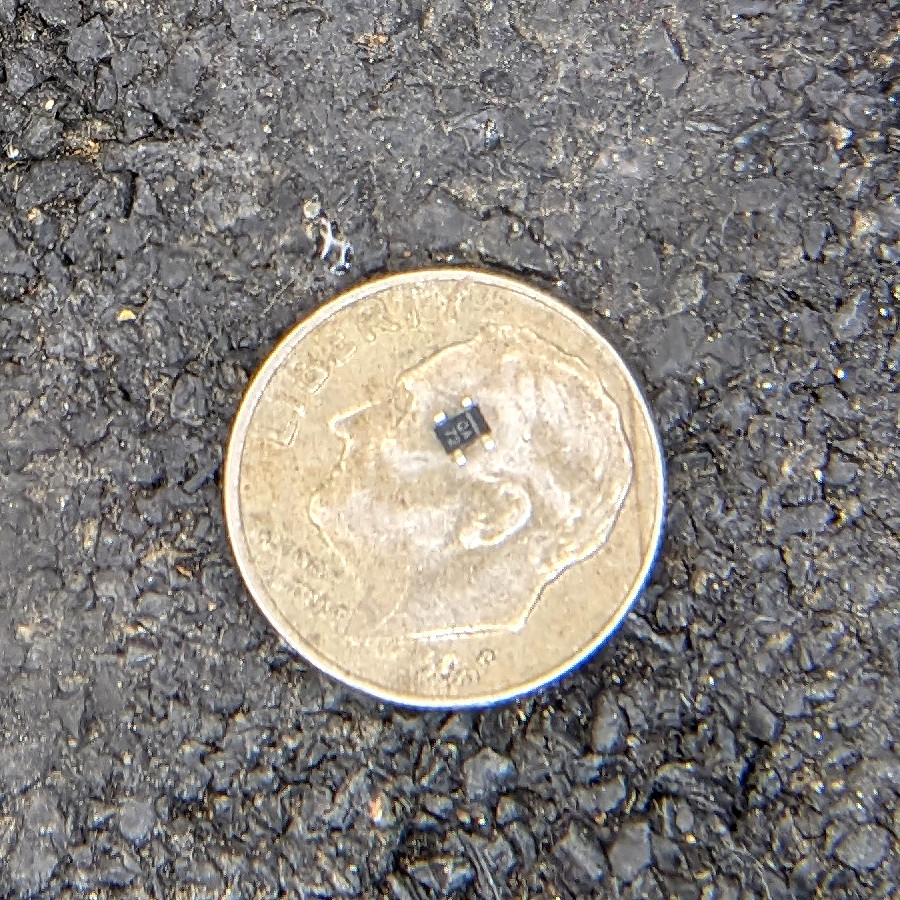
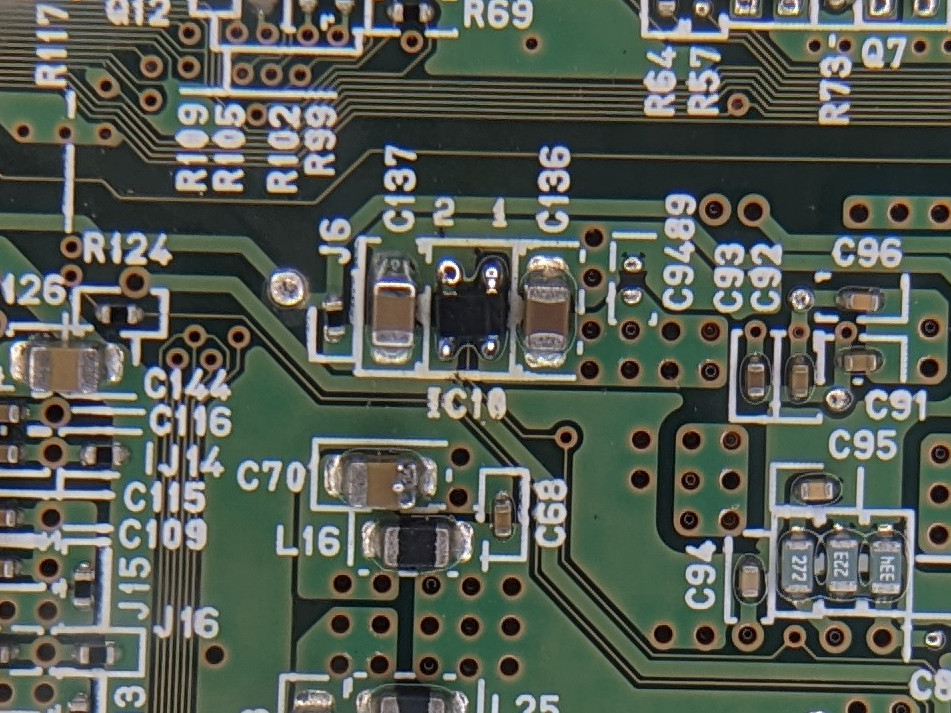
Surface mounted parts are by nature very small, and require some specialized solder techniques to replace without damaging the circuit board. Over the years I’ve replaced more than a few, some of them quite small. But the one I did today wins the prize for Smallest Part Ever! It’s a voltage regulator, and it goes in a Yamaha home theater receiver. Here’s a photo of the part sitting on a dime to give you an idea of its size: a tad larger than a grain of salt.
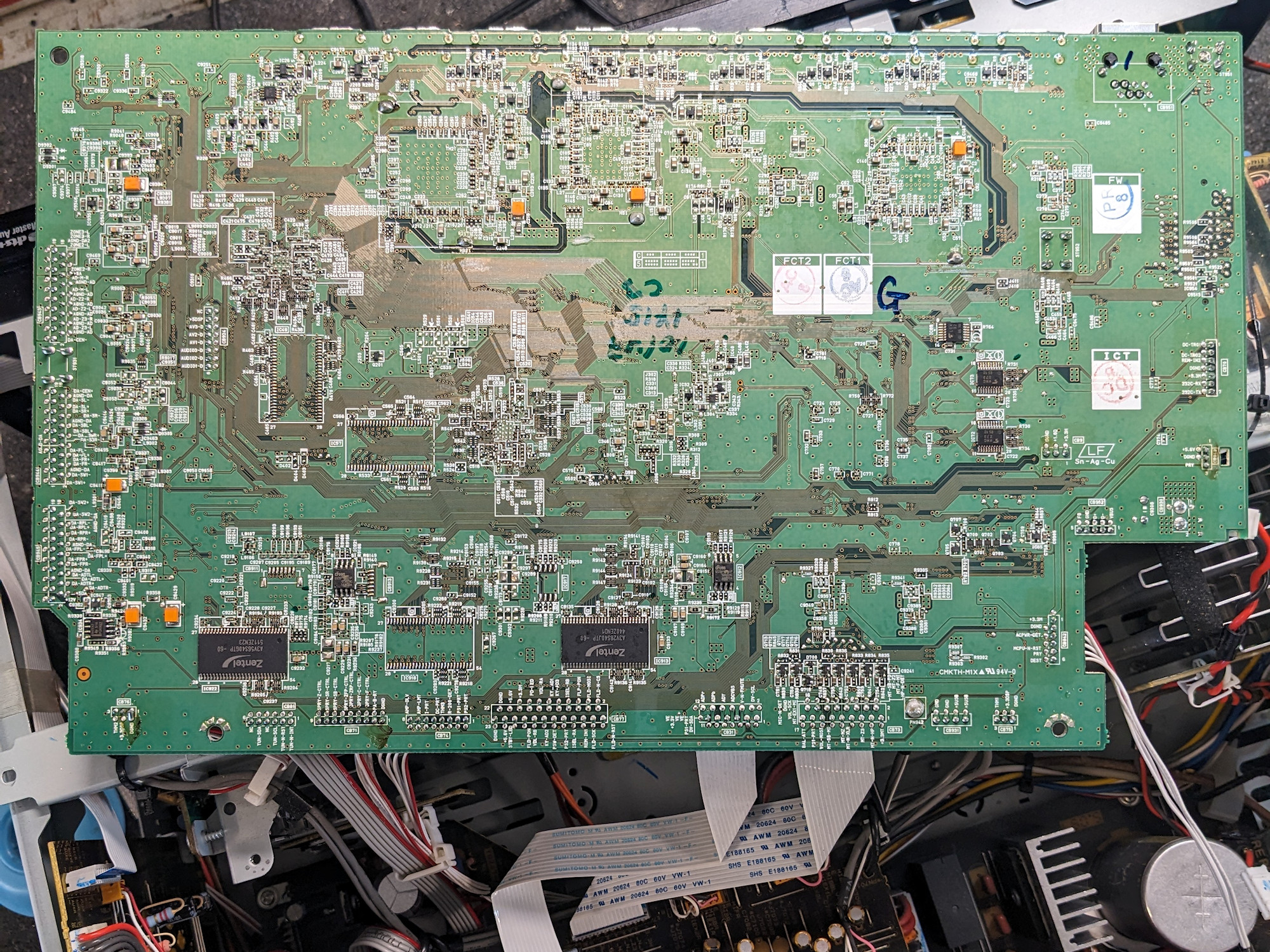
Here’s a photo of the circuit board it goes on.
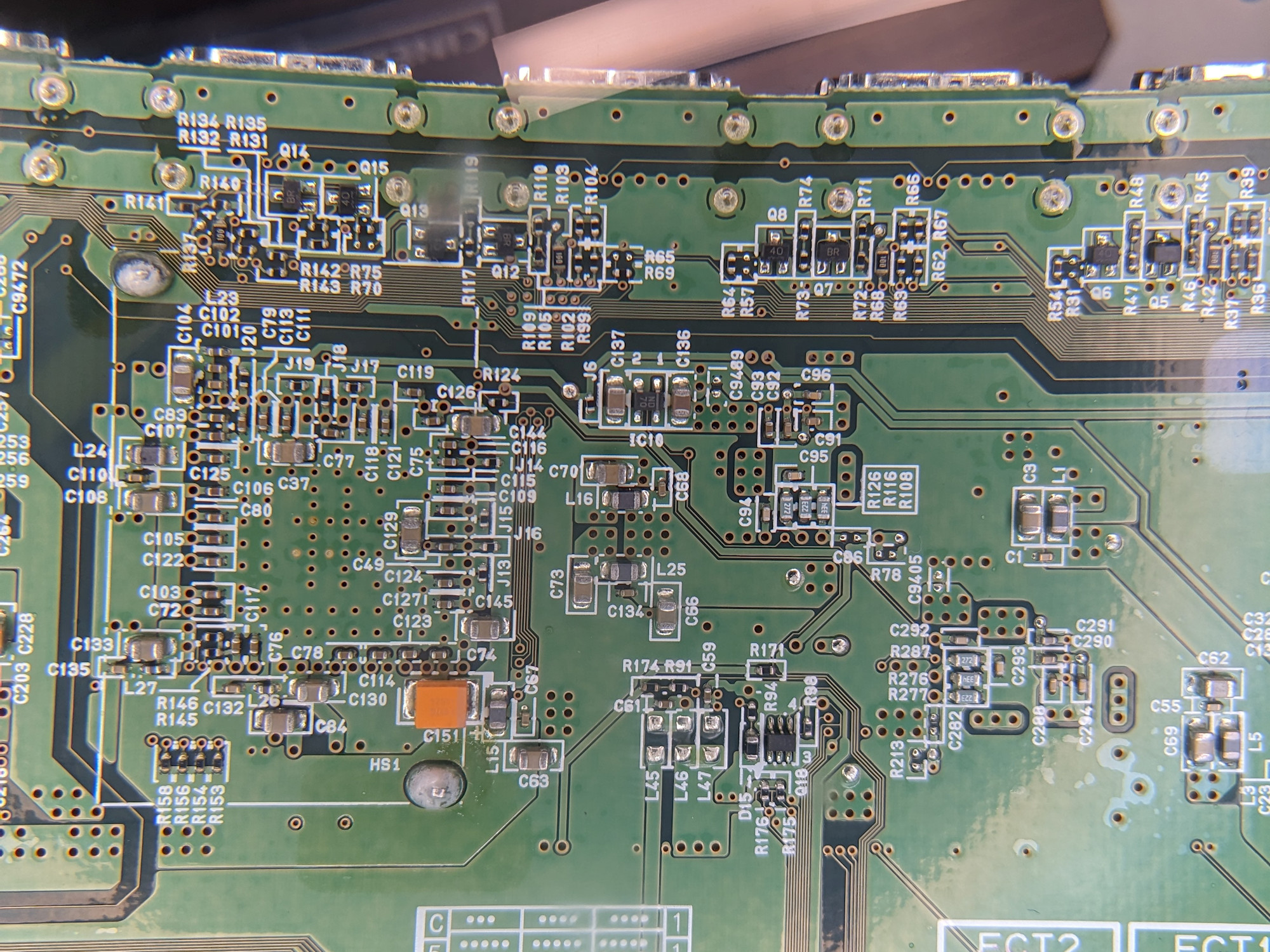
Can’t find it? I’m not surprised! Let’s zoom in some.
You can make it out pretty plainly now, just above the center of the photo. It’s designated as IC10. Here’s what the completed work looks like.
The bad news is that replacing the defective voltage regulator did not restore proper operation of the stereo. It’s not unusual for a power supply part to go out due to the failure of a processor, and that was probably the case here. But my customer was willing to pay me to take the risk, even if it didn’t prove successful.
Welcome to 2024! StereoMan expects to continue providing repair service on all kinds of vintage stereo equipment, including turntables, amplifiers and receivers, and even old console stereos! Please call 828-775-5905 to discuss your needs, and I’d be happy to give you advice or a rough assessment, and make an appointment if it looks like I can help you. My hourly rate remains at $48, as it has been for the past ten years.
When you call to inquire about getting your equipment repaired, I will tell you at some point that I work by appointment: you’ll need an appointment to drop off your equipment and you’ll need an appointment to pick your equipment up when the work is completed. I would think that any person who has ever had regular medical or dental care, or had their vehicle serviced, would understand what that means, but to my surprise, I sometimes get a customer who thinks it means they tell me they’re going to come by today, or tomorrow, or soon. Or, it means they can come by any time after their appointed date and time.
I’m afraid it doesn’t work that way. An appointment is a mutually agreed to time and date. I don’t tell you when you must come and you don’t tell me when I must see you. What I will do is tell you when is my first available, and if that’s not convenient to you, I’ll tell you what future days/times work for me, and before long we’ll hit upon one that works for both of us. Since I work out of my house, I can be flexible with my hours, but I must limit the number of people I see on a given day, and I must avoid having more than one person here at the same time, out of respect for my neighborhood.
Here’s a few other things that work:
* If you’re a few minutes early for your appointment, that’s okay. On the rare occasion that I’m not here, I’ll be back by the appointed time. * If you’re a few minutes late, that’s okay. My next appointment is at least an hour after yours, and our transaction will probably take no more than a few minutes. * If you can’t pick up your equipment for a few days or even weeks after repair is completed, that’s also okay. * If you’re not able to make your appointment, that’s okay too, I appreciate your letting me know and we can reschedule. *If you miss your appointment, that’s an inconvenience to me, but there’s no penalty, we’ll just need to try again another day. Call me!
I can usually give you an appointment within two or three working days, but if I am busier than usual it might be a week or maybe even more. Please be patient, I’m not trying to make your life more difficult.
I had a lull in incoming work over the holidays and I thought, well! I’m going to plan a little time off and go see my girls — my daughter and granddaughters — in Texas. I thought, hey! I’m pretty caught up and with this little lull, I’ll be even more caught up before long. Ha! The lull ended with the holidays and I got slammed with new work, including five (FIVE!) Tascam PortaStudios. Those suckers take a LOT of time to service.
I’m going to do my best to turn out as much work as I can before I head south to see my girls, but by way of a heads up, if you bring me any repair work between now and my departure, it probably won’t be done until March.
Almost without fail, my customers show up for their appointments, either right on time or a few minutes early. I appreciate that so much! There are exceptions, I’ll admit, but very few, and this morning one of those exceptions was resolved, and very favorably.
Today being the coldest day we’ve had in quite a few years, I chose to not make any appointments, out of respect for the well-being of my customers. But unexpectedly I got a call from someone who had missed three (!) previous appointments to pick up a piece I had completed back in September, asking if he could come by today or next Tuesday. I was honest about my reluctance to make yet another appointment with him, but I suggested that if he was going to be out and about in this frigid weather anyway, he could come by any time, just text me before he showed up. Well, he texted me, he showed up, and he was considerate enough to add an $11 tip to his $39 payment.
I still get occasional calls for this type of work, and regrettably I have to say sorry, I don’t do vehicles. I used to, back when I had my storefront in Biltmore Village. But COVID knocked out that aspect of my business and I had to shift gears in order to survive. I closed down my storefront at the end of 2020 and gave up my retail trade. I moved my business into my home in West Asheville and I’ve made the necessary adjustments to comply with the City’s restrictions, including the one that prohibits working on vehicles in a residential zone.
I’m no longer able to recommend Dula’s Automotive Alterations for this type of work. Sorry to say, they’re not doing it any longer either. I’m out of suggestions. Nobody wants to hear “Best Buy” and don’t even ask about Freeman’s.
I’ve had a run of old stereo consoles recently. Sometimes months go by and I don’t see even one, but lately I’ve had as many as a half dozen in my shop at the same time, and it seems like every week another one is coming in.
Legend has it that console stereos have the best sound. If you grew up with one and that’s how you listened to music during your formative years, then it’s true. If you’ve never heard one in your life and then one day … when you hear it, you will probably wonder if people who think they have “the best” sound should see someone about their hearing.
It’s a very subjective thing. “It was my grandmother’s” is the most common refrain I hear from people wanting to get one repaired. I get that. Otherwise it wouldn’t be worth what it costs to restore one.
It is time consuming work and often involves two house calls and a few parts that cost more than a latte at Starbucks. I always tell people in advance what to expect in terms of cost and delay in completing the repair. But after all these years of repairing consoles, I have excellent resources for electronic parts and for rebuilding mechanical parts, and a very high success rate as a result.